Your cart is currently empty!
Blog
-
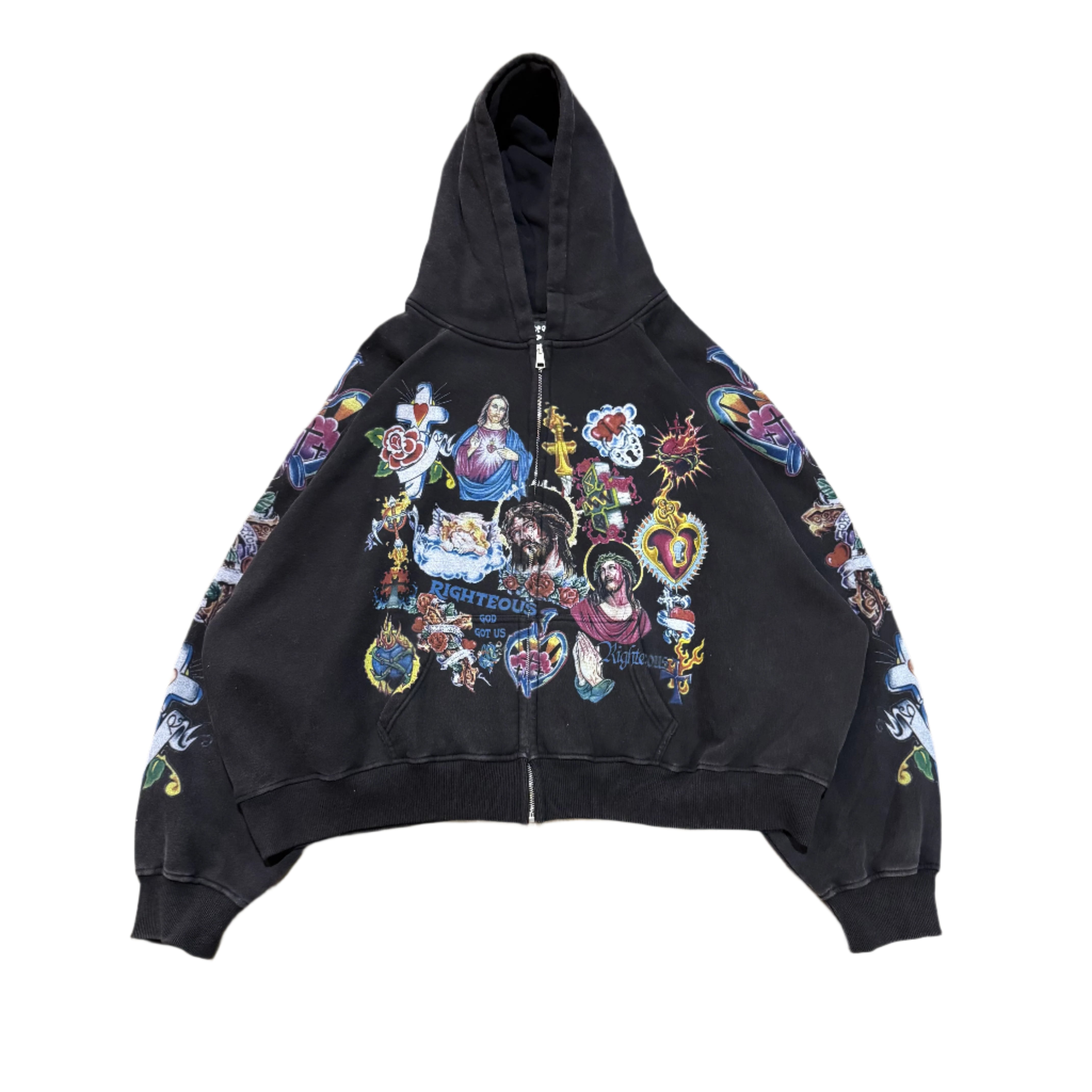
Righteous Pullover Hoodie Fit Guide Practical Buying Advice
Righteous Apparel Size Chart Guide: Discovering Your Perfect Fit
When shoppers shop online without a reliable reference point, finding the right size ought not to feel like guesswork — yet exactly that happens all too frequently. The brand built this guide because fit questions come up constantly, whether a customer is buying their first righteous hoodie or refreshing a wardrobe of righteous clothing staples. Everything from hang to how long it stays worn traces back to fit. A too-tight-under-the-arms shirt doesn’t last long in rotation — it’s shoved to the back of the closet inside a few weeks. A hoodie swimming at the shoulders looks sloppy, regardless of how strong the design happens to be. This guide walks through how We Are Righteous garments are cut, how to measure yourself precisely, and how to compare across categories so you order once and nail it the first time.
Sizing inconsistency across brands is one of the most common frustrations in online shopping. A medium in one label might fit like a small in another. That’s why we’re addressing it head-on rather than presuming customers are already familiar with how righteous apparel runs. If you’re new to the brand, or you’ve already read a righteous review or two before buying, this article still gives you the useful details for choosing confidently the first time around.
Why Fit Differs Throughout the Righteous Clothing Line
Not every garment in a collection is cut the same way, and that’s true for most apparel brands, not just this one. While a fitted righteoushoodie.org/t-shirts tee is cut snug against the body for a sharp sit on the frame, a relaxed hoodie requires extra room through the chest and sleeves to achieve that oversized silhouette. When you’re shopping the righteous clothing brand catalog, consider thinking about sizing in terms of garment category instead of a single universal chart.

Take heavyweight fleece versus lightweight cotton jersey — they perform in different ways. Because fleece has less stretch, a size that feels snug in a cotton tee could feel constricting in a heavyweight hoodie carrying a similar size label. That’s why We Are Righteous provides category-specific measurements rather than one blanket size chart for everything. Sleeve length, body length, and shoulder width all shift depending on whether you’re looking at outerwear, tops, or bottoms.
Shrinkage deserves a mention too. Cotton-heavy fabrics can shrink slightly after the first few washes if not cared for properly, typically in the range of 2-4% depending on fabric composition and wash temperature. Washing in cold water and avoiding high-heat drying preserves the original fit longer. Small as it is, this detail matters if you’re trying to hold onto the exact fit you selected at checkout.
Measuring Yourself Correctly Before You Buy
Picking up a supple measuring tape and recording three essential measurements clears up most sizing snags ahead of time. These three areas—chest, waist, and hip form the backbone of a correct sizing choice, and it only takes less than five minutes to jot down. Stand naturally, avoid pulling in your midsection, and keep the tape close but not constricting against the skin.
For chest measurement, wrap the tape around the fullest part of your chest, usually right at nipple level, and keep it level and horizontal. You measure the waist at the tightest part of your torso, generally an inch or two above the belly button. The hip figure is taken by wrapping the tape around the broadest section of your lower body, generally six to eight inches below the waistline.
Once you have these three numbers, compare them against the particular garment’s size chart instead of trusting memory of what size you wear elsewhere. Sizing varies widely from brand to brand, and even from one line to the next of the same brand, cuts shift based on fabric and style. Nothing works better to reduce return rates and get a garment that fits as intended on the first try.
Making Sense of Fit Types: Regular, Relaxed, and Oversized Cuts
Terms describing fit are often applied loosely across the industry, so it’s worth clarifying what each term means within the We Are Righteous catalog. A regular fit traces the natural line of the body with a small amount of ease through the chest and waist, creating a clean silhouette without being restrictive. Relaxed styles bring extra room throughout, most notably through the body and sleeves, resulting in a roomier hang that still holds its shape.
Within the righteous hoodie lineup, oversized fit appears often and is deliberately cut beyond standard proportions. The shoulder seam drops further down the arm, sleeves are longer, and the body length reaches beyond the hip. It’s a purposeful design decision, not an error in sizing, so if you order an oversized hoodie expecting a snug fit, you’ll likely be let down. Reading the product description alongside the size chart tells you which fit category you’re dealing with.
The same reasoning applies to bottoms. Relaxed-labeled joggers and sweatpants will have a more generous leg opening and roomier seat, while slim-cut styles narrow toward the ankle. Matching your expectation to the actual fit type prevents the most common complaint we see in customer feedback and in any honest we are righteous review: garments that fit differently than the buyer expected because they didn’t check the fit description first.
Reviewing Size Ranges Throughout Product Categories
Given that top layers, hoodies, and bottoms are built differently, it is useful to see how fit tends to change across categories alongside one another. The breakdown beneath this maps out typical fit patterns for the three most common product types in the current catalog, using conventional adult sizing from XS through XXL.
Category Typical Fit Chest/Waist Ease Length Behavior Tee tops True-to-size 2-3 inches of ease at the chest area Usual hem hitting at the hip Hoodie styles Oversized 4-6 inches of extra space at chest Extends 2-3 inches beyond the hip Jogger pants Relaxed 1-2 inches of ease at the waistline Ankle-length fit with a cinched cuff Seeing it laid out this way makes it more straightforward to understand why a size-medium hoodie might feel roomier than a medium tee, even though both are marked the same size. The construction and intended silhouette differ, and the variation is intentional, not a flaw. If you’re ordering from several categories at once, you should still consult the specific chart for each piece, but this comparison offers a starting point before you dive into specifics.
Frequent Fit Questions From We Are Righteous Customers
One question that comes up often is whether to go a size larger or smaller for a cropped look on hoodies. If you want the loose-fitting cut to fall shorter on the body, sizing down by one size usually achieves that without compromising shoulder and sleeve proportions too dramatically. Dropping two or more sizes, however, often throws off the garment’s intended fall of the garment, so it’s something we’d advise against.
Something else customers often ask involves wearing pieces on top of one another. Customers who plan to wear a hoodie over a t-shirt or long-sleeve base layer sometimes size up to accommodate the additional layers. This works well with relaxed and oversized cuts but can look overdone with standard-fit tops, since those are already fitted more snugly. If you intend to layer, factor that into your measurement comparison before ordering.
Questions about returns and exchanges are common too, and while full policy details are provided at checkout and in the FAQ section of the site, the core recommendation stands: when torn between two size options, check the specific garment’s finished measurements against your own body measurements rather than falling back on your usual size. This small practice clears up the bulk of fit uncertainty before an order is even placed.
Closing Fit Tips for 2026 Shoppers
Fit concerns shouldn’t stand between you and something you love. Taking five minutes to measure yourself, checking the fit type description, and cross-referencing the category-specific chart removes most of the uncertainty that causes returns. As the catalog grows and new silhouettes are introduced throughout 2026, these core ideas still apply regardless of the specific garment.
If you’re putting together a entire closet based on we are righteous brand items or getting a one hoodie to test the fit and quality, the method is the same: measure first, cross-reference with the chart, and consider the planned silhouette before locking in your size. Fit confidence results in less returning of items, improved durability through use, and a wardrobe that truly sees use instead of staying tucked away in a drawer.
Since good sizing guidance converts a single order into a repeat customer relationship, detailed charts and sizing breakdowns are published instead of vague general sizing. Measure twice, order once, and the fit will follow.
-
Tory Burch Holiday Style Tory Burch Flip Flops
Tory Burch Outlet Promises: Truth, Fiction and the Difference
Hardly any of the chatter around the outlet phrase is produced by the company, despite the fact that not many fashion queries collect more of it. What the term tory burch outlet genuinely spans is two separate things at once: a verifiable set of shops inside premium outlet centres, plus a rotating population of websites that take the name. Distinguishing the two is not a gut-feel exercise, because the brand has issued a plain-language statement that settles most of the question. This piece gathers the claims that travel furthest, states each as the myth it is, and sets the verified position beside it. Any prices cited below are observed market figures from September 2026 rather than an official price list. The habit worth building is to stop asking whether a discount looks good and ask instead which channel is offering it.
Myth: the company sells through an official online outlet
No such site exists, and this is the foundational fact. The company’s own counterfeit guidance is explicit on the point: it does not have an online outlet website. The same guidance also names the places authentic product is sold: brand stores, brand outlet stores, the brand’s own site, plus selected authorised department and specialty retailers. Put the two statements side by side and the conclusion becomes unavoidable: anything calling itself the official online outlet is, by definition, misdescribing itself. None of this is a judgement about any one operator, and it does not turn on how professional that operator looks. Because it is a structural fact about the channel, it also explains the way outlet shoppers get caught, which is that they evaluate the offer instead of the seller.
Fact: the physical outlet stores are genuinely real
Physical outlet stores have existed for years, concentrated in premium outlet centres. Published listings include locations such as Woodbury Common in Central Valley, New York; Las Vegas North; Tulalip in Washington; Cypress in Texas; Halton Hills in Ontario; and centres at Cabazon, Camarillo, Carlsbad, Livermore, Phoenix, San Marcos and Tulsa. There is an official store locator, maintained by the company and carrying dedicated pages torry burch totes for outlet locations; it is the only verification tool a shopper needs. An official outlet-store count could not be confirmed, which means any specific number is unsourced. The wider estimate on company boilerplate is around 400 stores worldwide, repeated unchanged for several years and best quoted with that caveat. If it is somewhere you can walk into and it shows on the locator, it is real.
Myth: design quality proves a site is genuine
The brand warns explicitly that a web address containing its name proves nothing, and that the same goes for search visibility, slick branding, assertions of official status and cut prices. The construction pattern is simple to describe without naming anything: the brand name glued to an authority word such as outlet, factory, clearance, official or sale, often hyphenated and on an unusual address suffix. Those addresses are typically registered recently and shielded behind privacy services, so one operation reappears under a new name within weeks. Nor does imagery prove anything, since the brand’s own campaign photography is copied outright and the real layout is cloned closely. What gives them away is the catalogue: a single percentage applied to every item, sizes that never sell out, machine-translated names, and styles from seasons that were never sold together. The trust pages do the same, usually showing no verifiable address, a free-mail contact, a dead phone line and a stale copyright year.
Myth: Saks OFF 5TH is still the easy online discount route
In the discount literature for this brand, no recommendation has aged worse. In early 2026 Saks Global filed for bankruptcy and abandoned the off-price business, with the Saks OFF 5TH e-commerce operation shutting down entirely. What survives is around a dozen physical locations, which operate as clearance outlets for full-line inventory rather than as a national chain. Nearly every older article on finding this brand cheaply still points readers to that site online, and the advice now leads nowhere. Anyone with a habit built around it should replace the habit rather than assume the site is temporarily down. Bluntness is warranted here, because the shopper hunting a defunct retailer is the one most likely to end up at an imitation storefront.
Fact: real off-price channels remain
The loss of one off-price retailer does not close down the category. Nordstrom Rack carries the brand and has been expanding, with roughly twenty-three new stores reported for 2026. TJ Maxx and Marshalls, both under TJX, also stock it, and TJX has reported plans for around 146 net new stores across 2026. Nordstrom full-line sale and clearance events carry the brand too, a different mechanism reaching a similar outcome. Outside the discount channels, the authorised current-season stockists include Bloomingdale’s, Saks Fifth Avenue, Shopbop, Zappos, Farfetch and SSENSE, while warehouse clubs have listed styles such as the Ines slide. None of these guarantees a particular discount at a particular time, and off-price assortment is unpredictable by design.
Myth: a “made in China” label means the item is fake
This is the most common false authentication test applied to the brand, and it fails immediately. China, Italy and Portugal are all reported as genuine production origins, and other countries appear in the market too. Country of origin settles nothing here, so rejecting a real item on that basis just loses money on a returns cycle. The related myths are equally weak, because dust bags are counterfeited and sold separately, and the same holds for boxes and paper hangtags. Guidance on serial numbers contradicts itself: some consignment authenticators say these bags carry none, while others describe an interior style and production code. Neither position is settled, every version comes from commercially interested parties, and no official authentication service run by the brand could be identified.
The signals side by side
Holding both patterns in view works better than testing one attribute at a time. The middle column below describes how a legitimate channel behaves; the right-hand column describes the imitation pattern. A single row proves nothing on its own, since a competent operator will get several rows right. It is the combination that matters, and the payment row comes close to decisive. What follows describes patterns and never a specific business, because the addresses involved rotate constantly. Use it as a checklist before you enter payment details, not afterwards.
What to check Legitimate channel The imitation pattern here Kind of channel Brand store, brand outlet, brand site, authorised retailer Bills itself as the official online outlet Depth of discount Varies by item and season Flat 80 to 90 per cent on everything Stock patterns Sizes and colours go out of stock Everything always available Product naming Uniform and current Misspelled or machine-translated Contact details Checkable address, phone that is answered Free-mail contact, dead phone line Payment method asked for Standard card or wallet checkout Wire, crypto, gift cards or bank transfer How you arrived Organic search, the locator, or a familiar retailer Paid social or shopping advertisement How the pitch reaches you, and what to do if you paid
The warning most articles omit concerns traffic source rather than site design. The majority of people who lose money to an imitation storefront are delivered through a paid social or shopping advertisement, not through organic search. That matters because an advertisement bypasses every habit you have built around recognising a familiar retailer and lands you at a checkout in two taps. Urgency, a countdown, a liquidation claim or a discount steep enough to override scepticism is what the creative is built around, and the outcome is consistent: nothing ships at all, despite a convincing order confirmation, or else a low-grade counterfeit arrives from overseas. In both outcomes the real product being harvested is the card details and the personal data. Should you have paid already, speak to your card issuer straight away about a chargeback, change any password reused at that checkout, and hold on to the confirmation and the advertisement as evidence. Suspected counterfeit operations can be reported through the brand’s enforcement contact and through national intellectual property enforcement bodies, though recovery is unlikely if you paid by wire, crypto, gift card or bank transfer.
One rule worth keeping
Boil everything above down to a sentence and you get something you can apply in seconds. If a website calls itself an online outlet for this brand, it is not this brand, because the company states it does not operate one. Everything else falls out of that: a physical outlet store gets verified against the official store locator, an off-price bargain gets verified by shopping a retailer that exists in the physical world, and a discount is never evidence of anything. Learn the correct spelling of the name as well, because misspellings feed straight into imitation-address construction. Keep in mind as well that the real business is not liquidating and does not take eighty per cent off an entire catalogue, so that pitch refutes itself. Used consistently, the channel rule turns the entire category boring, and that is the correct outcome.
-
Curated Luxury Handbags Authentic The Row Bag
The Row Bags at Resale: Which Models Hold Their Value
Nowhere is a deliberately quiet label judged as loudly as on resale. There are no exterior logos, no monogram canvas and no campaign explaining the price on a bag from The Row, and even so the resale market prices these bags in public, week after week. The message from that market since 2025 is genuinely unusual: a label with next to no logo recognition now sits near the top of the value-retention tables. Below, the intention is to set out which models are responsible for it, which ones do not, and how the numbers should be read without becoming a promise. Everything that follows is observed market behaviour, drawn from figures reported by the platforms themselves. None of it is investment advice, and none of it forecasts what happens next.
One more framing point before the data. The Row publishes no master price list, so every dollar figure here is an observed 2026 market price or a reported resale range rather than an official quote. Prices at retail move, prices on resale move faster still, and the gap between them can swing sharply inside a single season. A bag that trades above retail in one quarter can trade below it in the next. Resale prices can and do fall. The percentages are a snapshot of a moving market, not a fixed property of the bag.
The number that changed the conversation
The figure quoted most often comes from Rebag’s CLAIR report for 2025, buy online which recorded brand-level value retention for The Row at 97%. That number pushed the label into what the report calls the unicorn tier, meaning brands holding 85% or more of retail on the secondary market. This was the brand’s first crossing of that line, leaving The Row behind only Telfar, Hermes and Goyard in the ranking. Given that the bags carry no visible branding at all, the result runs against intuition. The implication is that second-hand buyers are pricing construction, silhouette and scarcity rather than a recognisable badge. A practical mechanism sits underneath it too, since production is modest and distribution short, leaving used stock scarce relative to demand.
Model by model: where the retention sits
Brand averages conceal as much as they show, which makes the model-level figures in the same report far more useful. Strongest of the group was the N/S Park Tote at 146% retention, meaning typical resale prices sat above original retail rather than below it. Next in line were the Margaux Tote at 107% and the Half Moon shoulder bag at 106%. Those three silhouettes hold up the brand’s reputation, and they are the ones searched for by name most often. The second and third entries sit close together; the tote sits a long way ahead of both. In that gap sits the point: a soft, unstructured the row tote bag priced mid-range at retail has become the most reliable resale performer in the line, ahead of bags priced two or three times higher new.
Model Reported 2025 value retention What it means N/S Park Tote 146% The strongest single performer, where a low retail entry point meets very broad demand Margaux Tote 107% The flagship, where thin new supply supports the price Half Moon shoulder 106% Priced at entry level in the shop, which leaves room above it on resale The Row, brand level 97% The brand’s first entry into the 85%-plus unicorn tier How that compares beyond the brand
Context matters here, since 97% sounds absolute until you see where the ceiling is. The same set of data puts the Hermes Kelly Mini II at 282% retention, the Birkin Sellier at 183% and the Constance at 137%. Goyard registered 123%, Miu Miu 104%. The Row is therefore not the market’s ceiling; it is simply unusually high for a brand of its age and scale, and it is climbing rather than settling. The Hermes numbers are built on decades of waiting lists and controlled allocation, something this label does not do. What the comparison really shows is that scarcity produces similar price behaviour whether it is engineered by a century-old house or simply falls out of a small, tightly distributed line.
Where value holds, and where it does not
This is the part that disappears once headline percentages start circulating on their own. Not everything the brand makes appreciates, and the pattern behind what does is consistent enough to state plainly. Where the strength lives is black and neutral calfskin in the signature silhouettes, the bags a buyer would still want three seasons later in exactly the colour they chose. Material and colour do more work here than the model name does. Discounting happens on the pieces with narrower appeal: canvas, nylon, sisal and seasonal colours all trade below retail with some regularity. A bright seasonal calfskin or a summer raffia can sit unsold at a price the same silhouette in black would clear within days.
- Holds up best: black and neutral grained or smooth calfskin across the Margaux, N/S Park Tote, Half Moon and 90’s Bag families.
- Mixed: suede, which commands a real premium new yet is fragile and much harder to move once worn.
- Often below retail: canvas, nylon and sisal or raffia constructions, and any strong seasonal colour.
- Unpredictable: archive-only models such as Sofia, Devon, Camden and the original Bindle, where thin trading volume makes any single sale a weak signal.
The looser figures, and how much to trust them
Outside the CLAIR data there is another layer of numbers moving through coverage of The Row bags, and it calls for more caution. Reports have put the Margaux as frequently selling around 40% above retail, while one authenticator reported its Margaux resale volume up roughly 44% year over year. A different marketplace reported pre-owned Margaux sales averaging about 15% above original retail. Reports in early 2026 put the Margaux 15 changing hands somewhere in the region of $4,350 to $6,000 and above, as an observed market price rather than any official one. Meanwhile the 90’s Bag has been flagged as the riser, with reported search volume on one large marketplace up around 55% year over year as of April 2025. All of these are directional signals from individual platforms rather than audited market-wide statistics, and one soft quarter can flatten any of them.
Supply accounts for some of what the Margaux is doing. The bag was reported across 2025 to have left third-party retailers, a change that was never officially confirmed by the brand, while the official line-up now carries the Soft Margaux and the Margaux Shoulder rather than the original. It has never been announced as discontinued. In resale terms the relevant point is that fewer new units come to the open market through stockists, so second-hand supply tightens for a bag already in demand. That is a supply story, not proof of a permanent premium. Widen the distribution again and the gap between retail and resale narrows with it.
Reading the market as a buyer
For anyone shopping rather than tracking indices, these figures should change what gets compared. Bought at retail in a core colour, The Row bag tends to hold its ground, which puts the real cost of ownership under what the sticker implies. A bag bought on resale at a premium already has that upside priced in, which means you are paying for immediacy rather than for value. The practical question is always whether the listing in front of you is priced against the current market or against a headline from a year ago. Condition, colour and completeness move a listing’s price far more than any model average does. Search for The Row for sale on any given afternoon and disciplined pricing will appear alongside wishful pricing.
- Establish the material first of all, since calfskin and suede behave differently on resale even within the same shape.
- Compare a handful of recent completed sales of the same model, size and colour rather than asking prices.
- Account for platform fees, authentication charges and shipping, each of which eats into any apparent gap.
- Take a heavy discount for corner wear, handle darkening, interior marks and a missing dust bag.
- Treat anything in the low hundreds as almost certainly counterfeit, however good the listing photographs look.
What these figures are not
None of this is investment advice, and retention percentages should never be read as a return. Handbags scuff, stretch, stain and go out of fashion like any consumer good, and their resale value hangs on the mood of a market nobody controls. Resale prices can and do fall, sometimes quickly, and a percentage published for 2025 tells you what already happened rather than what will. Fees and authentication costs cut into whatever spread exists between what you paid and what the next buyer will pay. A bag worn regularly loses condition, and condition is the single largest discount factor on every platform that trades these bags. The honest summary is that The Row handbags have lately held their value unusually well, which is a pleasant fact about a purchase rather than a reason to make one.
-
Americana Drop Denim Tears Shop Denim Tears Jeans
How to Wash a Denim Tears Hoodie Without Fading or Shrinkage
Use cold water, stay gentle, reduce friction, while avoiding heat. That’s the formula: cold water, mild color-safe detergent, inside-out in a mesh bag, low spin, and air-dry flat away from sun.
A Denim Tears garment is commonly garment-dyed cotton fleece with screen-printed or puff-printed graphics. Those choices make the fabric comfortable while rich in color, but they also raise the stakes: color might fade with abrasion, prints can crack under heat, and cotton does shrink if you blast it using a dryer. Should you regulate temperature and friction—while utilizing correct detergent—you keep the pigment rich and the fit intact.
What makes a Denim Tears hoodie prone to fading and shrinkage?
Piece-dyed cotton, fleece fleece, and printed graphics are sensitive to heat and wear, which hasten dye loss and shrinkage. Most “damage” happens in the first few washes and when dryers are employed.
Garment-dyed fleece gets the pigment once the piece is sewn, so the dye sits more at the surface and can transfer should you friction it against other pieces or apply high-alkaline detergents. Cotton contracts via relaxation and felting shrinkage upon contact with heat and tumbling. Applied and puff prints suffer when you apply high heat or high agitation, as binders and foams selvedge denim tears are stressed. The remedy is simple: cold water, gentle mechanics, and no heat drying.
Prep checklist before starting the Start
Execute a fast label check, a 30-second color test, and set the garment up to minimize friction. Such preparation avoids most fading and fit changes.
Check the care label and follow directions if they conflicts with anything stated here. Test colorfastness: dampen a white cloth in cold water and press on an interior seam for 10 seconds; when pigment moves, definitely wash alone, cool, and apply a color-catcher sheet. Clear pockets, zip zips, knot drawcords, flip the garment inside out, and position it inside a large mesh protective bag. Launder with comparable darks only and maintain the batch small so the hoodie isn’t grinding against rough items including denim or towels.
Which detergent and add-ins actually protect the color?
Utilize a liquid, color-care detergent without whitening agents, and avoid bleach and strong softeners. For recent purchases, a color-catcher sheet and a splash of distilled white vinegar in the rinse can reduce dye transfer.
Select a soft, pH-balanced liquid labeled \\”dark care\\” or \\”color care.\\” Skip powdered detergents with high alkalinity, skip chlorine bleach entirely, and be wary of oxygen bleach around prints. Skip fabric conditioner for fleece; it may clog up the surface and diminish artwork. A single color-catcher sheet in the washer captures loose dye in initial cleanings. For the first two or three cycles, pour 1/2 cup distilled white vinegar to the rinse compartment; it aids balancing remaining alkalinity and can reduce apparent bleeding on many garment-dyed cotton materials. Constantly check any additive on an inside seam first.
Washing machine options that don’t wreck the hoodie
Use cold water at 20–30°C, the soft cycle, minimal spin at 400–800 rpm, with a small, soft load. Greater gentle movement equals less dye loss.
Choose cold cleaning, delicate or hand-wash setting, and lower spin speed. If your unit enables, add an extra rinse to clear detergent that can dull dark fibers. Maintain the basin under-filled to reduce abrasion. Eliminate pre-cycle or soil-level boosts that enhance tumbling. When your unit auto-warms \\”cold,\\” set manual 20–30°C.
Should you hand wash instead?
Indeed—manual washing offers the lowest abrasion with optimal color retention, especially for brand-new, dark, or limited releases.
Pour into container with cold water, blend in a teaspoon of liquid color-protecting soap, dip the inside-out hoodie, then softly swirl for one minute. Let sit ten minutes, then rinse in cold water until it runs clean. Remove excess water without wringing, roll within a towel to remove more water, then place flat to dry. Hand washing is slower but excellent for protecting artwork and pigment.
Spot guide: eliminate grime without lifting color
Address marks by type, on the inside-out hoodie, with cold water and targeted products, keeping removers away from artwork where practical.
Against fatty food or sunscreen, dab some clear dish soap at the mark, tap with a mild brush, pause five minutes, then rinse cold. Against soil, permit it dry, brush off solids, then treat with a soft cleaner blend. Against protein-derived marks like sweat or blood, use cold water and an enzyme cleanser at the area, then flush; skip warm water, which sets protein-based spots. For dye transfer, soak the entire sweatshirt individually within cold water with a color-care detergent and a color-catcher; repeat if needed before the next wearing. For ink, use a stain pen sparingly on the back of the material and check first; solvents can scatter ink and affect prints. Keep chlorine bleach and aggressive peroxide gels distant from prints and pigment areas.
Drying: how can you avoid shrinkage and graphic splitting?
Skip the dryer. Adjust the wet hoodie, lay it horizontally on a rack, and dry it in the shade with moving air.
Post-wash, remove out water, then lay the hoodie flat on a fresh rack or towel, shoulders aligned and cuffs straight. Pat to shape to original measurements, particularly in length. Maintain it clear of direct sun avoiding UV fade. Operate a fan to speed the dry without heat. Avoid hanging by the hood or shoulders when wet; the weight can stretch seams and distort the fit. Heat plus tumbling drive cotton shrinkage and crack prints, so keep it air-dried only.
Should you iron or steam a Denim Tears hoodie safely?
Apply steam or low iron inside out and never press directly on artwork. A barrier cloth is non-negotiable around designs.
Minor wrinkles release with steam while the hoodie hangs; keep the head clear of graphics. If you must iron, turn the hoodie inside out, set the iron for low cotton or synthetic blend, lay a slim cotton cloth between the iron plus fabric, and avoid graphic zones entirely. Press, avoid dragging. High heat can gloss cotton fleece plus damage print binders.
Between-wash care that keeps it looking fresh
Air it out, de-pill gently, and keep clear of sunlight. Launder only when truly dirty to reduce color loss.
Following use, suspend the hoodie on a broad hanger for an hour to release moisture and odors, then store folded. For lint removal or light pilling, utilize a mild sweater comb or fabric shaver lightly and only on the fleece surface—not over graphics. Spot clean instead of full washes when possible. Maintain folded inside a cool, dark location; lengthy sun exposure fades pigment even when you’re not washing.
Troubleshooting: bleeding, fading, or a tight feel after laundering
Should you notice dye bleed, rewash cold with a color-catcher right away. When it seems tighter, relax the material via a cold soak and careful reshaping.
Pigment on other items typically sets throughout drying, so act fast: rewash affected clothes separately with a color-catcher plus cold water before they dry. Should the garment looks dull, detergent buildup could be the culprit; run a cold rinse-only cycle with a touch of vinegar, then dry flat. Against minor post-laundering tightness, soak the hoodie in cool water for ten minutes, softly expand on a flat area to your measurements, and let it air; you can regain a little ease, but lost length from excessive heat shrinkage is rarely fully reversible. Should you mistakenly tumble-dried it, avoid applying heat, and consider a professional wet-cleaning for regulated relaxation finishing.
Reference chart: optimal methods at a look
Choose the method that matches your risk level and time. Cold, gentle, and air-dry consistently win for color and fit.
Method Washing Temperature Process/Treatment Spin Additives Pros Risks Fading Risk Shrinkage Risk Time Machine, ideal approach Cool (20–30°C) Delicate + mesh bag Minimal (400–800 rpm) Dye-trap, vinegar rinse Easy, managed friction Minor friction vs. manual Low Very low Moderate Manual wash Cold Mild soak and move None — Best for color and prints Time/labor, full rinsing necessary Very low Minimal Long Tumble drying Heated/Hot Tumble High — Fast Shrinkage, print cracking, fading High High Short Professional wet cleaning Controlled Low-mechanical systems Low — Specialist care, regulated drying Price, accessibility Minimal Very low Moderate Expert Tip
During the initial three washes of a fresh, deep garment-dyed hoodie, run it solo: use a mesh bag, add a color-catcher sheet, and select bonus rinse cycle. This pairing minimizes abrasion and pulls wandering color so it doesn’t redeposit and “gray out” the surface.
Quick facts most people miss about sweatshirts and color care
Point 1: Most cotton shrinkage happens from dryer heat and mechanical tumbling, not through cold-water washing. Point 2: Pigment-dyed garments use a binding agent sitting near the surface; abrasion and high-alkaline detergents loosen that bond and hasten fade. Item 3: Soaps with optical brighteners can make dark colors look dull by reflecting blue-violet light; color-care detergents avoid these agents. Point 4: Reduced spin speeds reduce tiny abrasion and assist keep printed inks from stress-cracking. Fact 5: Enzyme “color care” formulas often include cellulase that gently removes fiber, which could make darks look deeper by minimizing surface haze.
Putting it all together: the no-fade, no-contraction method
Reverse inside out, bag it, wash cold on delicate with a liquid color-care detergent, use a color-catcher for early washes, low spin, and extra rinse cycle. Next reform and air-dry flat in shaded areas.
This routine targets the two forces that destroy a Denim Tears hoodie—heat plus friction—while removing residue that makes dark material seem tired. Maintain infrequent washing, spot clean between wears, and treat stains by type. Should you ever have to choose between comfort and preservation, skip the dryer each time. Your color stays saturated, your graphics keep sharp, and the fit stays exactly as you bought it.